

[AD – PR*]
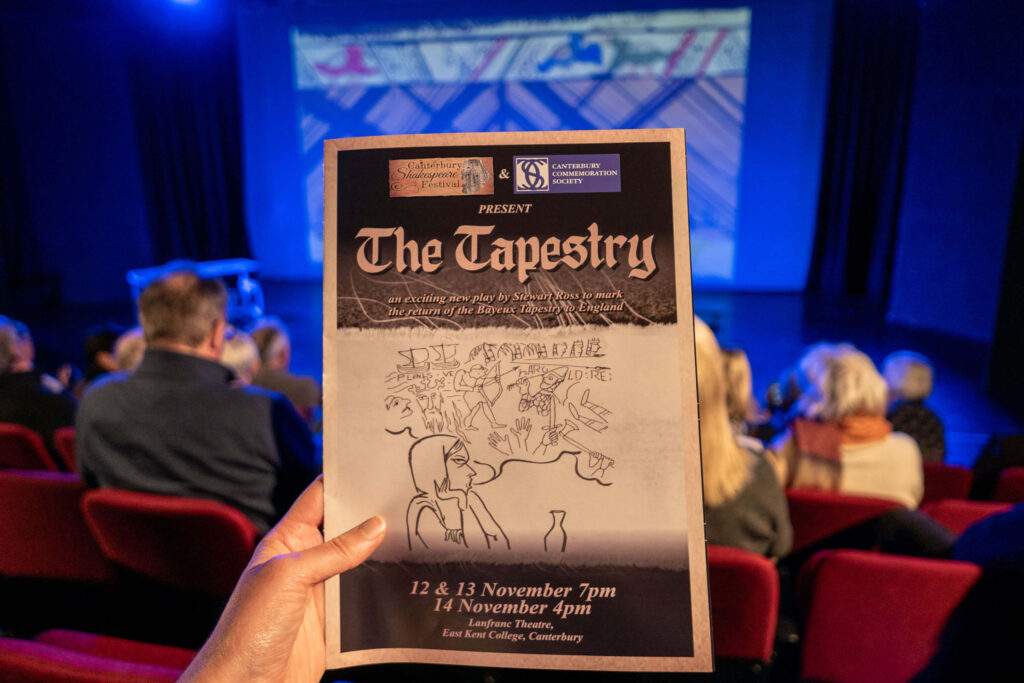
This year the nearly 1,000 year old Bayeux Tapestry has returned to England for a period, and is on display at the British Museum until July 2027. The arrival of the historical artefact has generated national attention and in a year where the Bayeux Tapestry is heavily back in the public consciousness, I had the opportunity to watch a new play that explores the world surrounding the events of 1066 and the story of the tapestry’s creation. Written by award-winning author Stewart Ross, the play has been staged at the Lanfranc Studio Theatre at East Kent College in Canterbury for three performances and is presented by the Canterbury Shakespeare Festival and Canterbury Commemoration Society. I was invited to review the play’s premiere, which brings together professional actors and community performers and is directed by Ross and John Moss. The material interestingly takes a different stance to history and explores the events through Queen Edith’s perspective.
Where history and theatre collide
The play begins at Hilda’s Mead Hall in Canterbury, where change is in the air and locals gather for drinks. Rumours are growing of Edward the Confessor’s ill health and his wife Queen Edith (Tiffany-Ellen Robinson) is visiting the town before a strategic visit to Normandy. Taking court at Hilda’s establishment, the audience sees the Queen meet with Stigand (Barry Stephens), the Archbishop of Canterbury, before departing at a time of great uncertainty. Without an heir for the throne, the Queen is acutely aware that her fate upon Edward’s death is unclear, and sets motions in place for the future, bargaining with the Saxons and the Normans by promising a tapestry for their cathedral. It’s a play that covers a time in history of great significance, but also uses artistic licence to explore how the Queen could have potentially played a part in the origins of the tapestry itself. Furthermore, it highlights everyday people who would have been living during these complex times and the impact the conflict had on them. In a future iteration of the play, it’d be great to see slightly swifter pacing in the narrative, but the current version certainly builds a clear picture of the community at the heart of the story.
Accessibility of the material and narrative
For full transparency, other than learning about the Battle of Hastings at school, I was not particularly familiar with this time period. This is partly what drew me to the piece, and even though at times more extensive knowledge of the central figures would have been helpful, it didn’t hinder my ability to follow the story. The character of Queen Edith has many layers, and Tiffany-Ellen Robinson brilliantly combines regal elegance and decorum with raw vulnerability. You walk away feeling like you know this version of the Queen on a deeper level, thanks to the performer’s commitment to the role. There are also lots of relatable characters in the story such as the maternal Hilda (Maggie Anwell) and her young niece Freda (Jeevan Kennedy). In a historical piece, it is brilliant to see such strong female characters featured, looking back on history through a more inclusive lens.
A historical play to watch out for
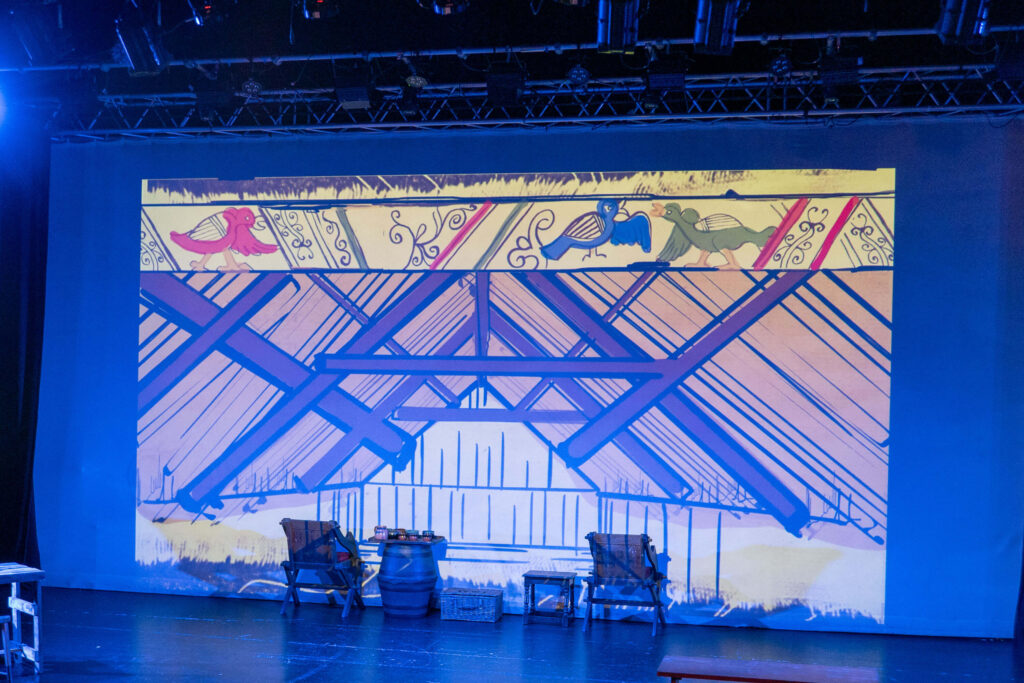
There’s lots to like in Ross’ The Tapestry and from this staging, I believe there is a bright future ahead for the work. It’s also worth mentioning that the medieval costumes (Valerie Maysey), backdrops (Beth Stone) and live music (Matthew Watkins and St Mary’s Observatory) really help to transport audiences back in time to the 11th century. The company has created a believable period piece at the Lanfranc Studio Theatre, which will make audiences reflect on this time in history from entirely new perspectives. The final performance is today (Saturday 14th November) at 4pm. Tickets are just £10 and can be purchased via the Gulbenkian Theatre’s website.
*My ticket for The Tapestry was gifted in exchange for an unbiased review.
Comments